


The Hidden Risk of Share Based Compensation - Part III
Part III – The Gaps
A typical saver who parks their cash in a safe, protected savings account still faces the risk of inflation eating away at the value of their money. By the time they come to spend it, their money may have increased slightly on paper, but lost value in real terms.
Solution: invest, don’t save.
But a typical DIY investor faces several pitfalls they can fall into that are reflected in gaps in returns they’re entitled to for putting their money at risk.
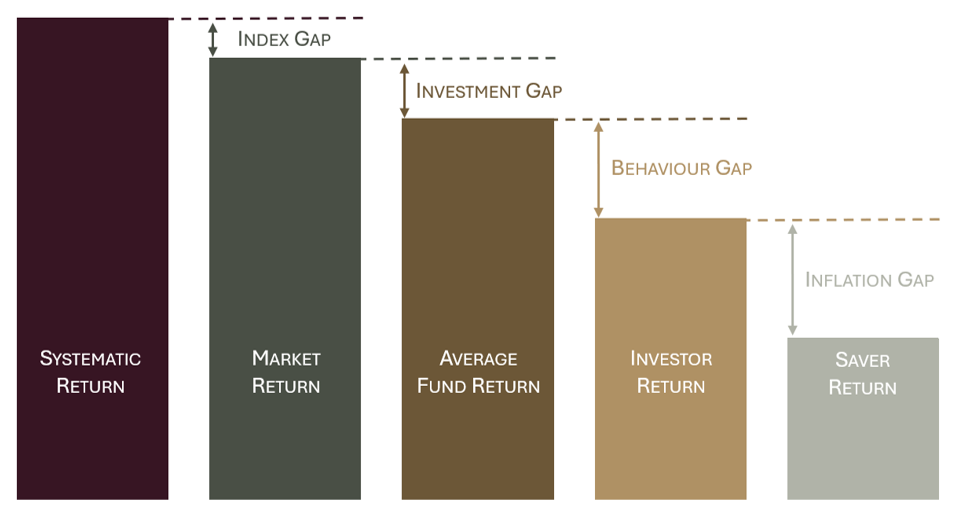
Investing in an index fund is a solid approach but leaves some money on the table, while
- the average actively managed fund underperforms the market index, but
- the average investor doesn’t even get the fund return they should because of bad behaviour like market timing, and
- the saver with risk-free interest rates doesn’t get the equity risk premium needed to beat inflation over time.
There’s an additional gap for those who earn stock-based compensation and might have passively become an active investor.
While stock markets won’t suffer catastrophic losses, any single stock is open to this risk.
Indeed, 41% of UK stocks have suffered this catastrophic loss – falling by 70% or more from their peak and never recovering. The picture isn’t any rosier in the US, at 44%.*
It should also be noted that catastrophe isn’t equally likely for companies across sectors – for UK tech stocks this figure jumps to 68%.
If the majority/all of your wealth is tied up in your company’s stock, you are open to this catastrophic risk, however unlikely you think it might be from your insider’s perspective.
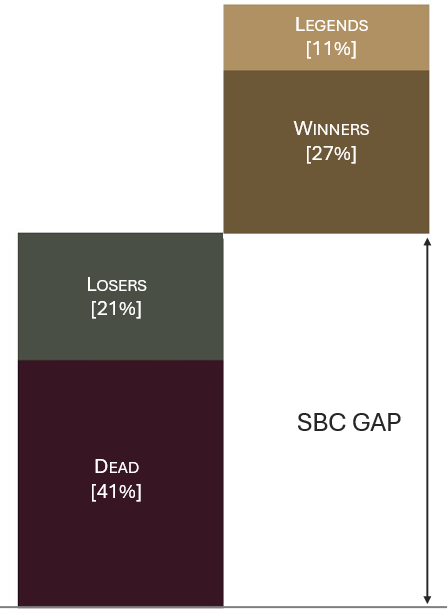
The companies that suffered catastrophic losses combined with those that didn’t beat the index total 62%.
It’s also not as straightforward as the remaining 38% simply beating the market. They did, but only 11% saw the kind of returns that you’d probably want for taking on the risk of holding onto your company’s stock.
Maintaining a heavy allocation in your employer's stock is beyond typical single-stock concerns – it puts your entire household balance sheet at risk, as your human capital (salary) and your financial capital (equity) share the same single point of failure.
You can fill in the SBC gap through regular, systematic liquidation of vested equity and rebalance into globally diversified funds. This removes the 41% chance of catastrophe entirely, ensures you definitely own 11% of mega winners, and all the while locking in the value of your compensation.