

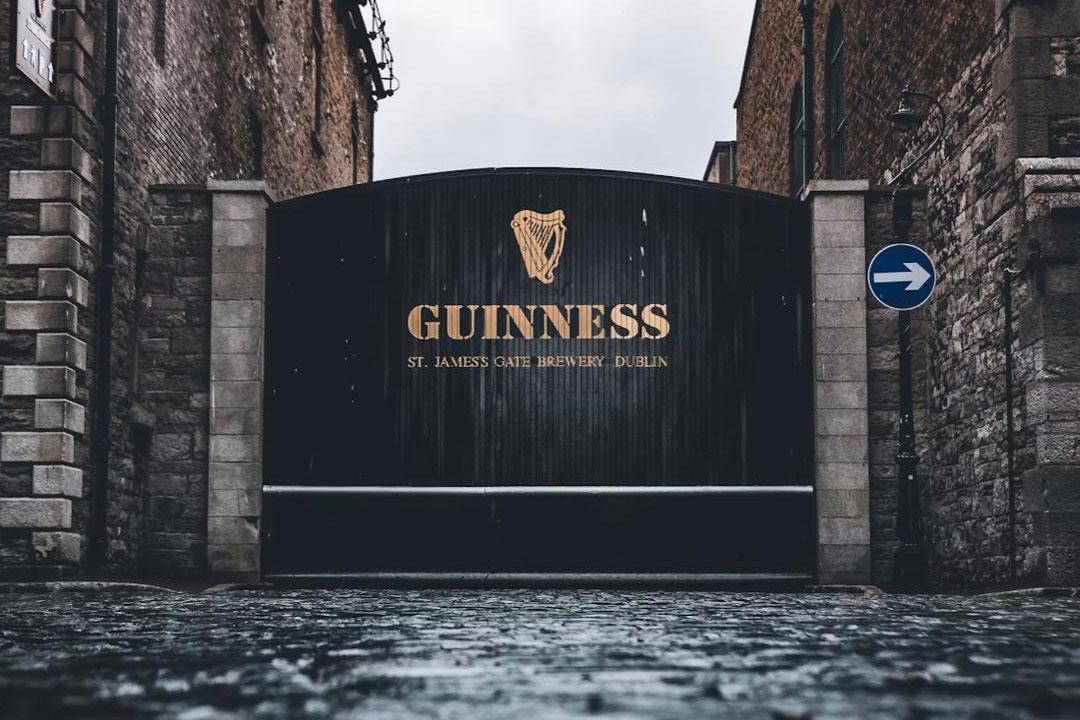
Ireland Should Buy Guinness. Seriously!
Diageo is having a terrible day. Ireland has €13 billion sitting in a drawer. You can see where this is going…
Diageo's share price fell 14% today. In a single session. That's the kind of drop that makes CEOs cancel their lunch reservations and quietly update their LinkedIn profiles. The drinks giant - owner of Johnnie Walker, Baileys, Captain Morgan, and, crucially, a little stout you may have heard of - has been struggling with sluggish spirits demand, a hangover from the post-pandemic boom that has left investors feeling a bit queasy.
But where most people see a bad day on the FTSE 100, I see something else entirely. I see an opportunity. A national opportunity.
Ireland, it is time to buy Guinness.
The Apple Money Is Just Sitting There
Cast your mind back to 2024, when the European Court of Justice ruled that Apple owed Ireland €13.1 billion in back taxes — money that Ireland had, in one of the greatest acts of financial self-flagellation in modern history, spent years arguing it didn't want. (The logic at the time was that taking the money would spook foreign direct investment.)
Fortunately, the money has since been collected and is parked in the Ireland Strategic Investment Fund (ISIF) and related state vehicles, largely invested in relatively vanilla infrastructure funds, climate transition assets, government bonds, and a smattering of private equity.
It has been, to put it plainly, the most Irish possible thing to do with a windfall — put it somewhere responsible and never enjoy it.
But what if Ireland thought bigger? What if Ireland thought, specifically, about a world-famous stout brewed at St. James's Gate since 1759?
What Would Guinness Actually Cost?
Here's where it gets interesting. Guinness is not a separately listed company - it sits inside Diageo, which owns somewhere north of 50 brands. But Diageo does break out performance by category, and Guinness is consistently one of its star performers.
In Diageo's most recent full-year results, the Guinness brand generated approximately £1.7–1.9 billion in net revenue, with beer operating margins typically running in the 18–22% range, suggesting an operating profit in the region of £320–420 million annually. Guinness has also been one of the few bright spots in Diageo's recent portfolio, with strong growth in Africa, the US, and a remarkable cultural renaissance in the UK and Ireland driven by a creamy pint's appeal to a new generation.
If you were to carve Guinness out as a standalone business and apply a reasonable consumer staples EBITDA multiple - call it 16–20x earnings - you arrive at a valuation in the range of €6 billion to €9 billion. Slap on an acquisition premium for the brand, the St. James's Gate brewery, the global distribution network, and the sheer iconography of the thing - the harp, the toucan, the two-part pour - and you're probably looking at €10–12 billion to get the deal done. Perhaps €13.1 billion would avoid any bidding wars.
The amount Ireland has in Apple money.
It's Like Taking the Cliffs of Moher Private
Now, I know what you're thinking. The Cliffs of Moher are already publicly accessible. And that's rather the point.
The difference is that the Cliffs of Moher are owned by Clare County Council, while Guinness is owned by a British multinational headquartered in London. No disrespect to Diageo - they've stewarded the brand well - but there is something faintly absurd about Ireland's most iconic export stewarded from Soho.
Imagine the Cliffs of Moher being owned by a FTSE 100 company and having its management decided by a board in London. Ireland would lose its collective mind. And yet, here we are.
A Better Investment?
Let's be coldly rational for a moment, ISIF's current portfolio targets a commercial return to exceed the five-year rolling cost of Irish Government debt. The fund has generated a 10-year annualised return from 2014 to 2024 of 3.4%. Nothing too wrong with that, but also nothing too ambitious about it. Guinness, as a standalone business, would offer:
Pricing power. People will pay almost anything for a pint poured correctly. The brand has demonstrated consistent ability to take price increases without material volume loss - the hallmark of a genuinely great consumer business.
Global growth. Guinness in the US has been growing double digits. Africa is a structural growth story that has decades to run. The brand is, improbably, getting cooler with younger drinkers.
Tourism integration. The Guinness Storehouse is already Ireland's most visited paid tourist attraction, drawing over 1.7 million visitors annually. State ownership could unlock deeper integration with Tourism Ireland, heritage branding, and a world-class cultural experience at St. James's Gate.
Soft power. This one doesn't show up on a DCF model, but it matters. Guinness is Ireland's most powerful ambassador. State ownership would give Ireland direct control over one of the most recognised Irish brands on earth - at a time when national branding and cultural identity are increasingly valuable geopolitical assets.
Against all that, ISIF currently holds stakes in things like renewable energy infrastructure and Irish residential property funds. Worthy, certainly. But when Ireland's grandchildren ask what the country did with the great Apple windfall of 2024, "we bought some wind turbines and topped up a housing fund" is a considerably less satisfying answer than "we bought Guinness."
Diageo's Bad Day Is Ireland's Moment
Today's 14% drop has knocked roughly €5.5 billion off Diageo's total market capitalisation. The company is under pressure from activist investors, dealing with category headwinds in premium spirits, and facing a strategic question about whether a massive, diversified drinks conglomerate is actually the right home for individual iconic brands.
In other words, this is the perfect moment for Ireland to call London and make a bid.
Would it be complicated? Enormously. Diageo would not simply hand over the keys to St. James's Gate because someone waved a cheque from a sovereign wealth fund. There are competition considerations, cross-border distribution agreements, and the minor question of what happens to the global Guinness markets - the Nigerian brewing operations, the US import business, the Malaysian factory - which don't fit neatly into a "national heritage asset" framing.
But the essence of the idea is sound. Ireland has a one-time windfall of unexpected money. Guinness is, arguably, undervalued inside a struggling conglomerate. The brand is Irish in a way that transcends ownership structure. And the Irish state has shown, with the NTMA and ISIF, that it is capable of running sophisticated financial operations when it puts its mind to it.
The Pitch, In Summary
Thirteen billion euros. One iconic brand. A 14% discount on the parent company. A national heritage narrative that writes itself. A tourist attraction that already works. A global distribution business with structural growth in two of the world's fastest-developing consumer markets.
All Ireland has to do is be slightly less responsible with its Apple money than it has been so far.
Note that this article is (mostly) tongue-in-cheek. The financial figures cited are based on publicly available Diageo reporting and analyst estimates. The acquisition of Guinness by the Irish state would require regulatory approval, willing sellers, and probably several rounds of negotiation - ideally conducted over a pint. Perhaps John Collison (host of the Cheeky Pint podcast) could mediate?
I needed to move quickly so AI has been used in the production of this note, but the idea was all mine!