

Beyond the Index : Improving on a Great Idea
Where are all the billionaires?
In 1900, America had around 4,000 millionaire families. If those families had done nothing clever at all, simply invested in the stock market, spent a modest slice each year and left the rest to compound, the maths says they should have produced somewhere in the region of 16,000 billionaire households by today.
Now compare that to reality. The 2026 Forbes list counts a record 989 billionaires in the entire United States, and virtually all of them are first-generation wealth from technology, finance and business. As Victor Haghani, a former Wall Street trader, put it in his TEDx talk and later in his book, The Missing Billionaires, you will struggle to find one who traces their fortune back to a millionaire of 1900. The maths predicted 16,000 old-money billionaire families. History delivered essentially zero.
The market was not the problem. The returns were there. The fortunes were lost to fees, trading, concentrated bets, taxes and overspending. In short, the biggest risk to long-term wealth is rarely the market. It is what investors do to themselves along the way.
Indexing: the great equaliser
This is why indexing has been such a gift to investors. A simple, low-cost global index fund solves most of the problems that made the billionaires go missing:
Cost. Index funds routinely charge a fraction of what traditional active managers charge. Over decades, a 1% annual fee difference compounds into a life-changing sum. Keep costs low and compounding works for you rather than against you.
Discipline. An index fund does not panic in a downturn, chase last year's winner, or fall in love with a story stock. It simply holds the market.
The evidence. Over the 20 years to 2025, only 12% of US equity funds both survived and beat their benchmark. In other words, seven in eight professional stock pickers failed to deliver what a simple index would have. And past success is little guide: of those funds that ranked in the top quartile over one five-year period, only 23% remained top quartile over the next five years. Owning the market cheaply beats most attempts to beat the market expensively.
If the missing billionaire families of 1900 had access to a global index fund and the discipline to hold it, the rich lists would look very different today.
Let us be clear: indexing is great. It is one of the best things ever to happen to ordinary investors, and nothing in the rest of this article is a criticism of it. If the choice is between a low-cost index fund and a typical high-fee active manager, the index fund wins, and the evidence above shows it wins comfortably. The question is a different one: can indexing be improved upon while keeping everything that makes it work?
At Biograph, we regard low-cost, diversified, evidence-based investing as the foundation of every client portfolio. And we believe the honest answer to that question is yes.
The quiet flaw in cap weighting
A traditional index fund weights every company by its market capitalisation. The bigger the company's market value, the more of it you own. This is cheap and efficient, but it has a built-in feature worth understanding: the more expensive a stock becomes relative to its fundamentals, the more of your money the index allocates to it.
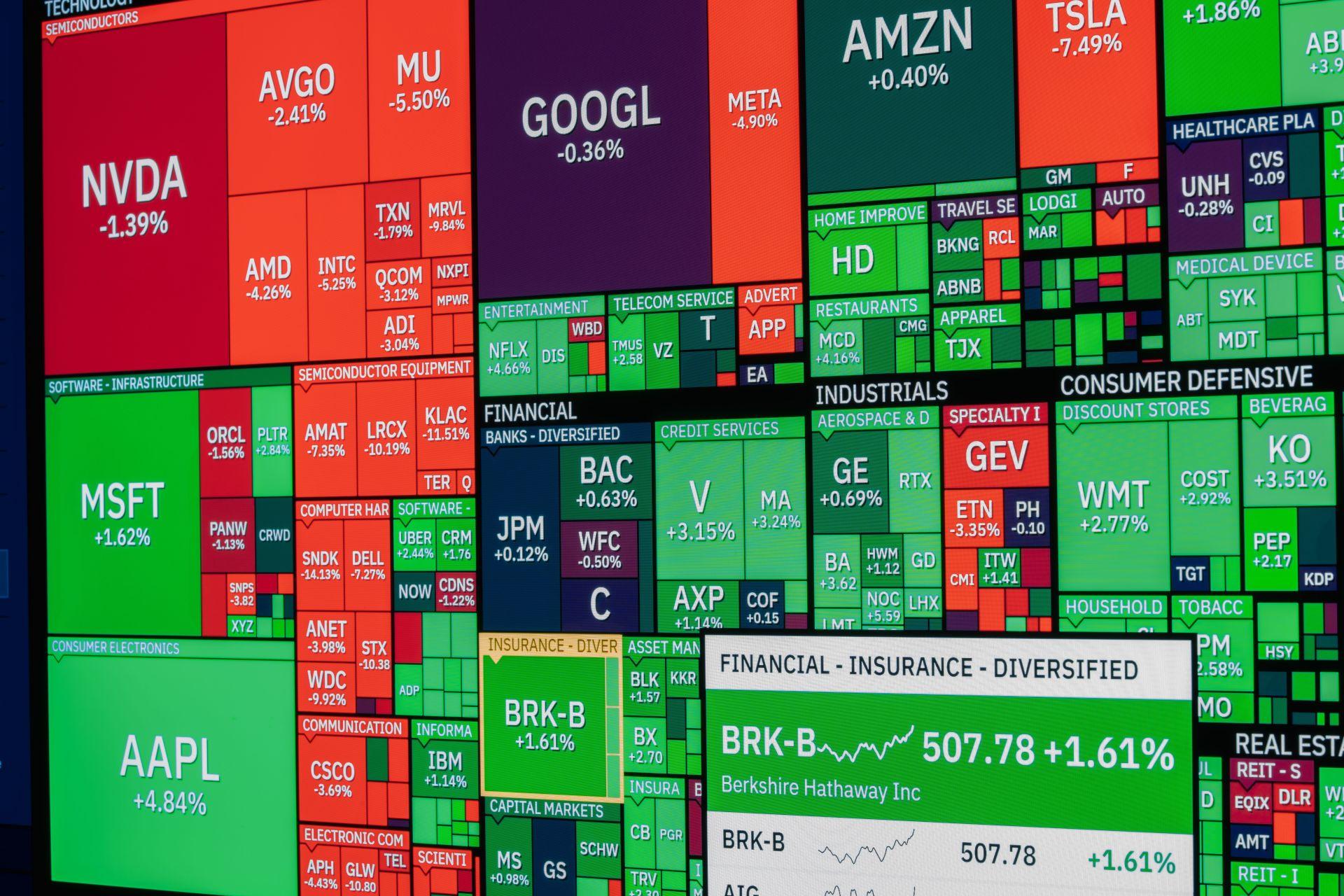
You can see this clearly in today's market. In the S&P 500, the index most investors instinctively reach for, the ten largest companies now account for roughly 37% of the entire index of around 500 stocks, with Nvidia alone at approximately 7.5% and Apple at over 6%. Little wonder the index currently trades at a weighted average price-to-earnings ratio of around 31.
Nobody knows whether those companies will justify their valuations. They may well do. But an investor in a cap-weighted index today is, whether they realise it or not, making a very large allocation to a small group of richly priced stocks.
A smarter kind of passive
There is a middle path between traditional active management, with its high costs and poor odds, and pure cap-weighted indexing, with its concentration in whatever is currently expensive. It is often called systematic or evidence-based investing, and Dimensional Fund Advisors has been implementing it since 1981, translating decades of academic research (including the work of Nobel laureate Eugene Fama) into live portfolios.
The approach keeps everything that makes indexing great: broad diversification, low costs, low turnover, no forecasting, no star managers. Then it makes deliberate, research-backed adjustments:
Broader diversification. The Dimensional World Equity Fund holds 13,771 stocks across the globe, versus around 500 US companies in the S&P 500. Its top ten holdings account for 15.4% of the fund, versus roughly 37% for the S&P 500. You still own Nvidia, Apple and Microsoft, just far less of them: Nvidia at 2.6% rather than 7.5%, Apple at 2.4% rather than more than 6%.
Tilts toward the long-term drivers of return. Decades of research show that, over time, smaller companies, lower-priced (value) companies, and more profitable companies have delivered higher expected returns than the broad market. Dimensional portfolios systematically overweight these characteristics rather than trying to pick individual winners.
Low cost. The World Equity Fund's ongoing charge is 0.35% per annum. This is index-fund territory, not active-fund territory.
What makes the evidence-based approach so compelling is that it also makes intuitive sense. You do not need a PhD in finance to see the logic. Owning 13,771 companies rather than 500 is more diversified, not less. Not putting your largest allocations into the most expensive stocks in the world is prudence, not cleverness. And paying less for each euro of company earnings is exactly what every sensible buyer tries to do in every other walk of life; nobody thinks the best way to buy a business, a house or a car is to pay the highest possible price. The academic research simply confirms what common sense suggests, with decades of data behind it.
There is value in value
The clearest way to see the difference is to look at what you actually pay for a euro of company earnings in each approach:
Vehicle | Weighted Average Price/Earnings |
S&P 500 Index | 30.5 |
Dimensional World Equity Fund | 23.6 |
An investor in the S&P 500 is paying nearly €31 for every €1 of annual corporate earnings. The globally diversified Dimensional World Equity Fund, with its modest tilts away from the most expensive mega caps and toward the drivers of higher expected returns, buys the same €1 of earnings for under €24.
Valuations are a poor short-term timing tool, but they are one of the better guides we have to long-term expected returns. Paying less for each euro of earnings does not guarantee a better outcome in any given year. It does, however, stack the long-term odds in your favour, which is exactly what the missing billionaires failed to do.
The Biograph view: pursuing a better investment experience
Bringing the threads together, here is what 125 years of vanished fortunes, the academic evidence, and our own experience with clients all point to.
1. Trust market prices and capture the market return. The market is a remarkably effective information-processing machine: hundreds of billions of dollars of equity trades are settled every single day, and each trade brings new information into prices. Trying to outguess that machine is why seven in eight professional managers fail to beat their benchmark over 20 years. The market return is generous, and most investors, including the professionals, fail to collect it. Low-cost, diversified, buy-and-hold investing is the foundation.
2. Let markets work for you and stay patient. People expect a positive return on the capital they supply, and historically the equity and bond markets have delivered growth of wealth that has comfortably outpaced inflation over the long run. The market return is the reward for patience, not for activity. Investors who stay invested through full market cycles collect it; investors who dip in and out generally do not.
3. Diversify properly, not just locally. Diversifying within your home market is not enough. An investor confined to a single country might own a few hundred companies; a truly global investor can hold thousands of companies across nearly 50 countries. Broad diversification means you never depend on one stock, one sector or one country, and you are positioned to capture returns wherever they occur, because nobody knows in advance which market will lead in any given year.
4. Keep costs and taxes relentlessly low. Fees, trading and tax drag were the silent killers of the great fortunes of 1900, and they compound just as ruthlessly today. Managing expenses, turnover and taxes is one of the few levers entirely within your control, and it is worth more than almost any forecast.
5. Structure the portfolio along the dimensions of expected returns. Rather than chasing past performance, which the evidence shows rarely persists, tilt systematically toward the characteristics that decades of research link to higher expected returns: company size, relative price and profitability in equities; term and credit in fixed income. This is how you improve on the index without abandoning the principles that make indexing work.
6. Behaviour beats brilliance. Markets go up and down, and headlines are engineered to provoke: sell now, looming recession, record highs, the top ten funds to own. Reacting to any of it is how good plans die. None of the above works without the discipline to stay invested through uncomfortable markets, resist market timing, and look beyond the noise. This is where good advice earns its keep: not in predicting the future, but in helping families focus on what they can control, so they do not become the missing billionaires of 2100.
Indexing was a revolution, and it remains a brilliant default. But a revolution is a starting point, not a finish line. The evidence, and plain common sense, suggest you can keep everything that makes indexing great and still do better: own more companies, pay less for their earnings, and tilt the odds of long-term compounding in your favour.
That, in the end, is how billionaires stop going missing.
This article is for information purposes only and does not constitute investment advice or a recommendation. Past performance is not a reliable indicator of future returns. The value of investments may fall as well as rise. Fund and fund industry data sourced from Dimensional Fund Advisors (fund data as of 31 July 2026; US-domiciled fund performance study is the Dimensional Fund Landscape covering the 20 years to 2025). S&P 500 constituent and concentration data sourced from S&P Dow Jones Indices and index tracking funds as of mid 2026. Billionaire figures sourced from the Forbes World's Billionaires List 2026. Biograph Wealth Advisors Ltd.
| Warning: The above is general in nature and any specific action should be discussed in advance with your Financial Advisor Warning: The value of your investment may go up as well as down Warning: Past performance is not a reliable guide to future performance |